Today, we're more dependent on technology than ever. This project uses technology to help us disconnect and rediscover real-world joy—focusing on music, interaction, and creativity for a more mindful and fulfilling life.
In this project, I’ve created a real MVP using the Lean UX methodology with the main idea of implementing slow living in our lives and funded by a fintech company, meeting objectives through KPIs that provide a solution to promote the slow living philosophy and funded by a fintech company.
For more details on this work, everything is documented in this link.
Research & Analysis
I conducted in-depth research on this philosophy and existing initiatives promoting it, such as meditation, mindfulness, and creative activities. While exploring, I came across BBVA’s YouTube talks, which solidified my decision to have BBVA as the project’s sponsor.
Product ideation
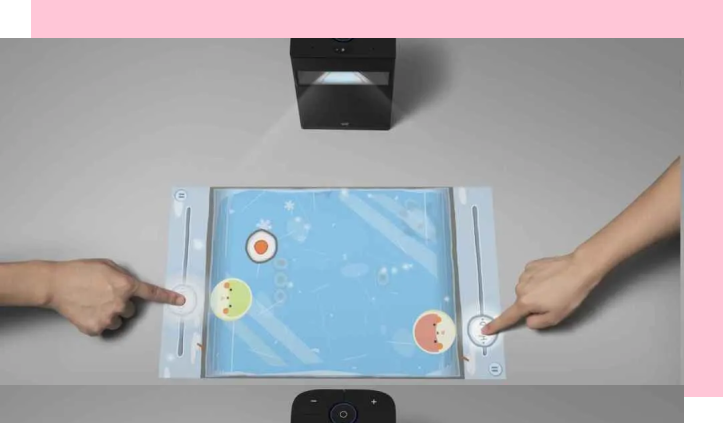
I decided to take a bold and disruptive approach by exploring smart projectors. Why not use this advanced technology to promote slow living? For example, projecting BBVA talks onto a living room table. I also realized that home is where we feel most comfortable and can truly disconnect through meaningful activities.
What does a smart projector do? It’s a device that can display an image on any flat surface that we can project it onto. It is not a projector to which we send the screen of our mobile phone, but it has its own operating system, memory, and storage to run applications and play content.
The product
The idea would ultimately consist of two products:
Projector: A purely technological product that can display its interface on a horizontal or vertical surface. It would offer us various activities such as
Sensory activities like playing videos/audios in rain or beach scenarios.
Leisure activities such as learning to play instruments, cooking, gardening.
Motivational talks in an immersive reality in our own living room, creating a relaxing environment that enriches us personally.
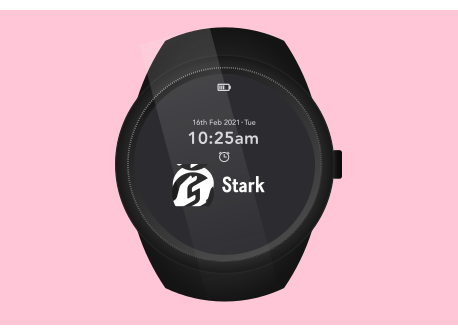
Smart Watch: The smart projector also includes a smartwatch to monitor all those parameters, providing comprehensive tracking of your physical and emotional state throughout the day for those times when you are away from home. When you return home, the smartwatch will sync with the projector, and after processing all that information, the projector can recommend activities to help you relieve the stress of your day, in line with the slow living philosophy.
Analysis & protopersona
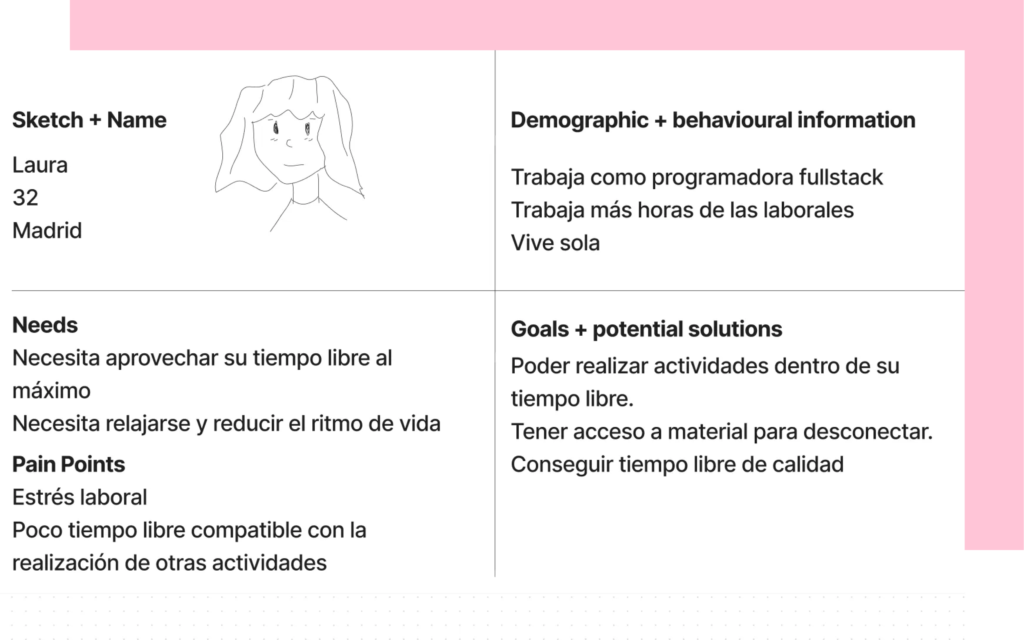
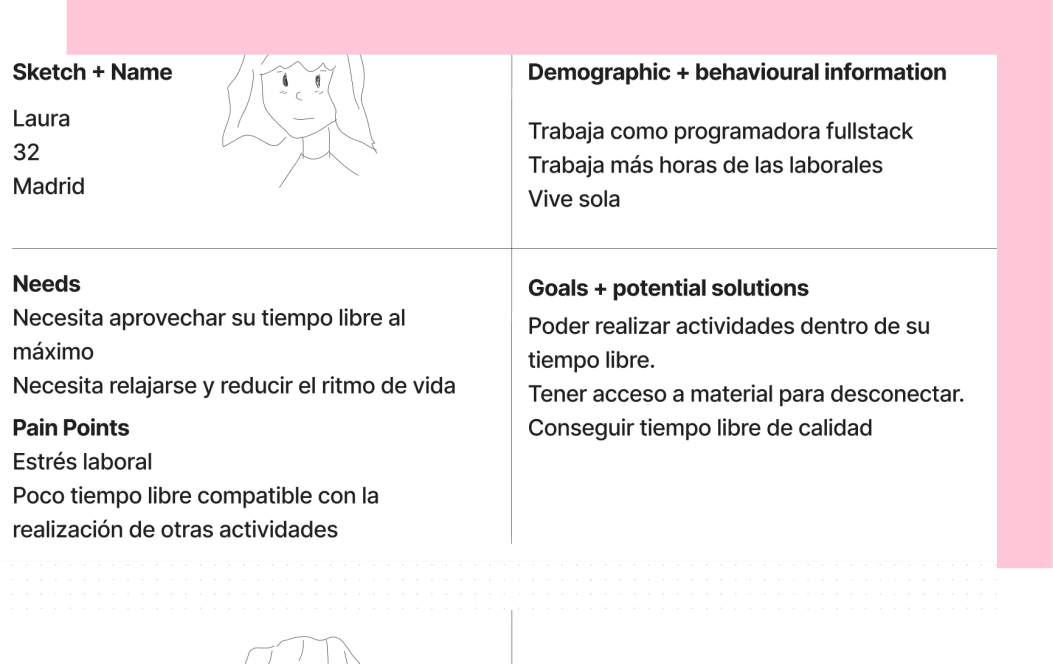
I decided to build a prioritization matrix with the idea of using the projector as the foundation for the final concept, transform those statements from that matrix into hypotheses in order to validate them and finally make a protopersona that encompasses the characteristics our user would have.
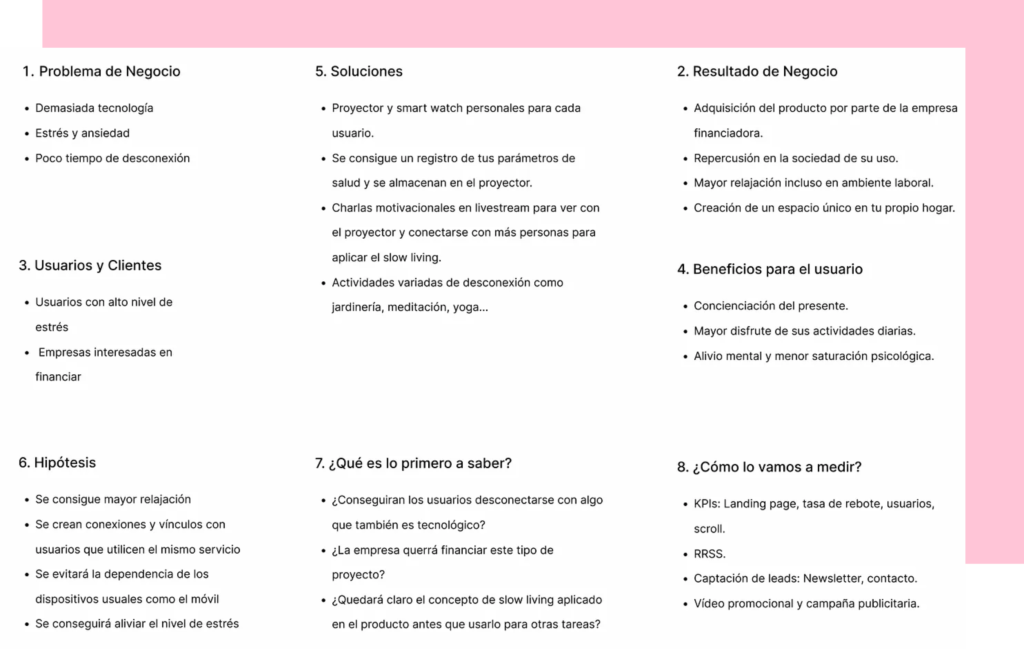
Next, I defined the Lean UX Canvas, the deliverable that helps us understand the business model of my product:
Result
Finally, we determined the user stories. These help us specify how to respond to our hypotheses and validate them through the various elements of the concept, that is, through the different features of our Landing page and its metrics. I have reached the moment of launching the idea: the Stark Experience. Here is the promotional video that I’ve made for it:
Visuals
Why Stark? something so highly technological resembled the functions that Ironman performs in the movie, except this time we were going to use it for ourselves, for slow living.
The logo symbolized that we use (the two hands creating the effect of the letter ‘S’ of Stark) technology to help us be more present.
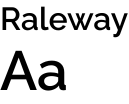
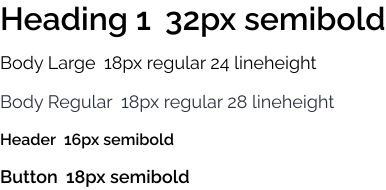
As for typography, I have chosen Raleway with different weights and sizes for the website
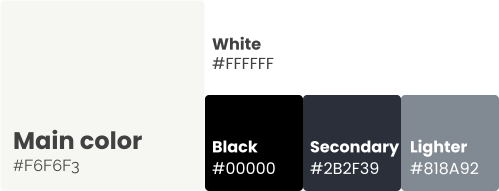
And finally, we have chosen neutral colors of whites and blacks, suitable for mid to high-range technology, to convey the elegance we needed on the website.
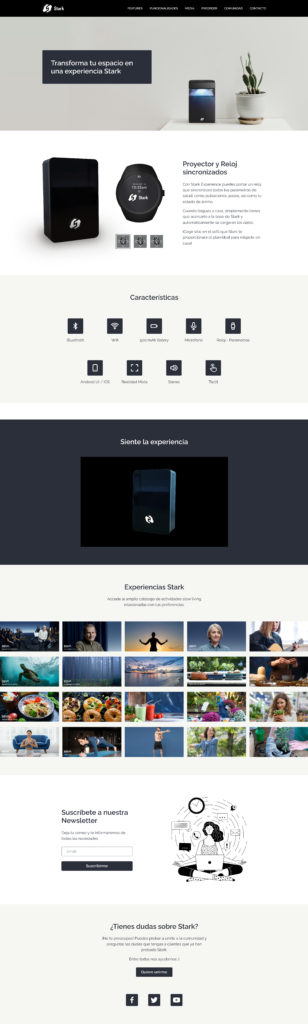
High-fidelity, prototype & final landpage
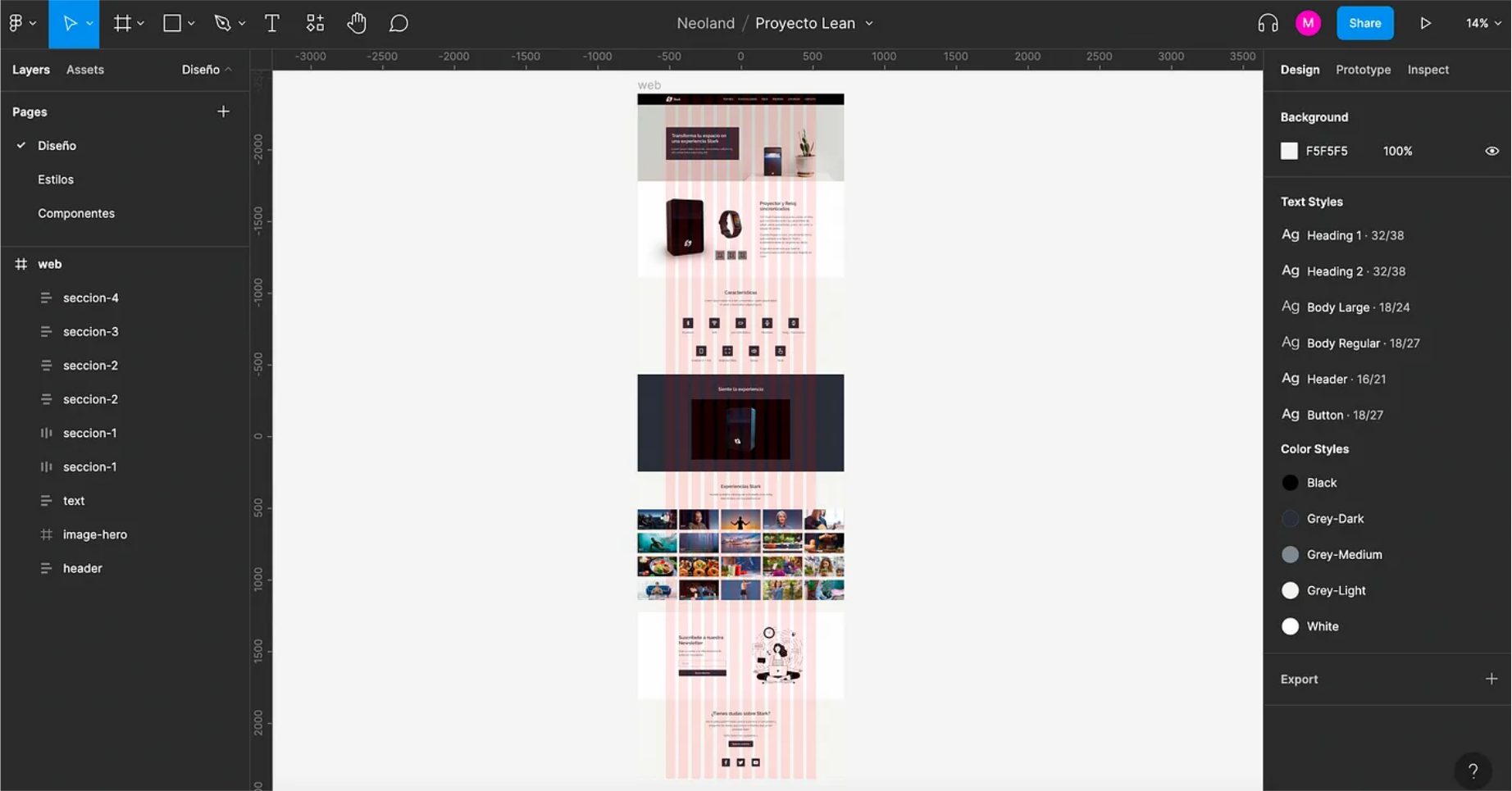
The prototyping was created using the Figma tool following Bootstrap guidelines with a 12-column grid, each column being 65 px wide and having a 24 px gutter.
Objectives / KPIs:
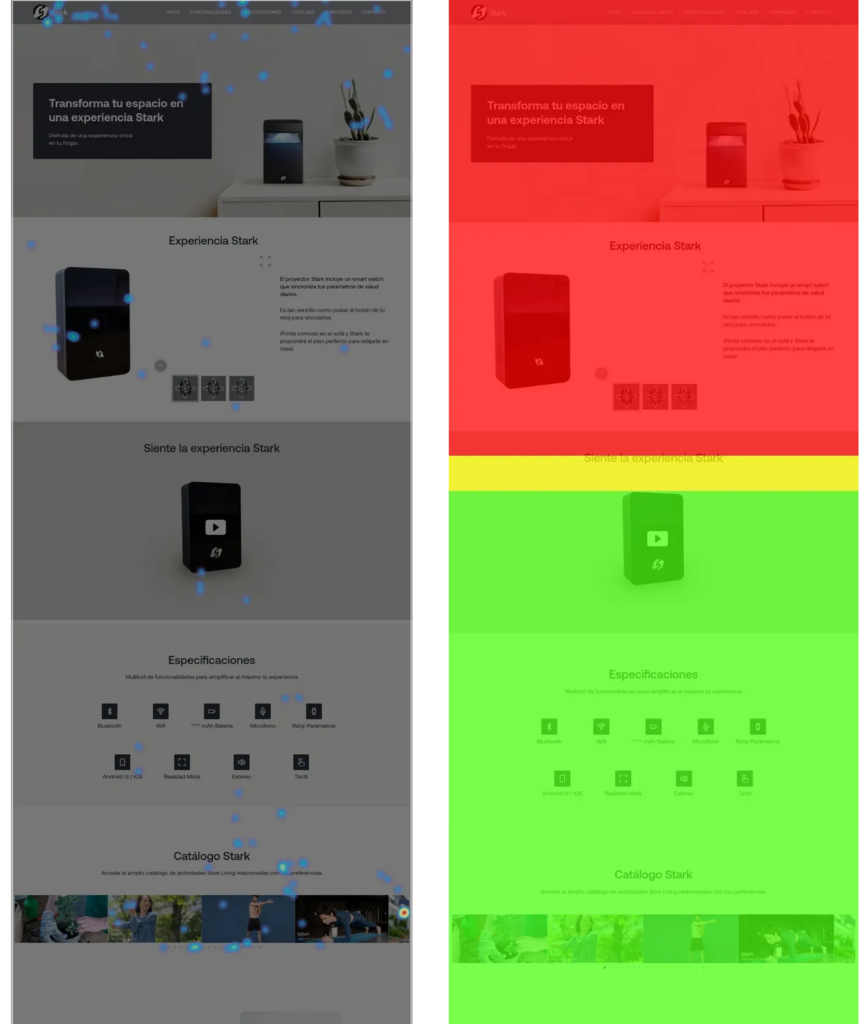
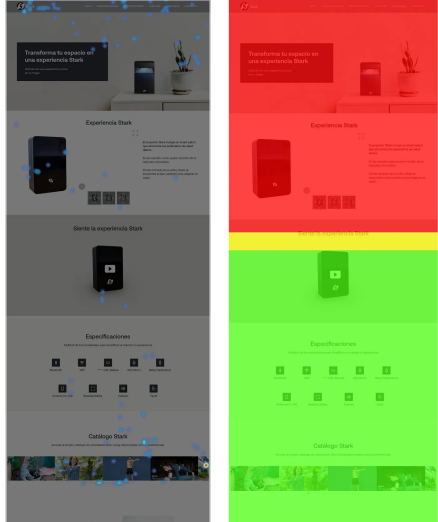
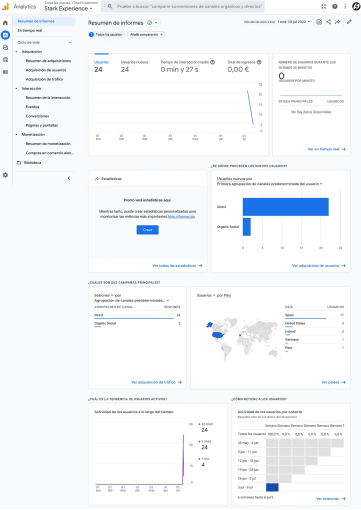
In order to reach the target audience, I set several objectives that we were going to measure through KPIs for Stark Experience using tools like Hotjar, Google Analytics, and lead capture with a newsletter. In the end, I’ve obtained the following results. Here, we could also see that up to 60% of users scrolled all the way to the bottom of the page.
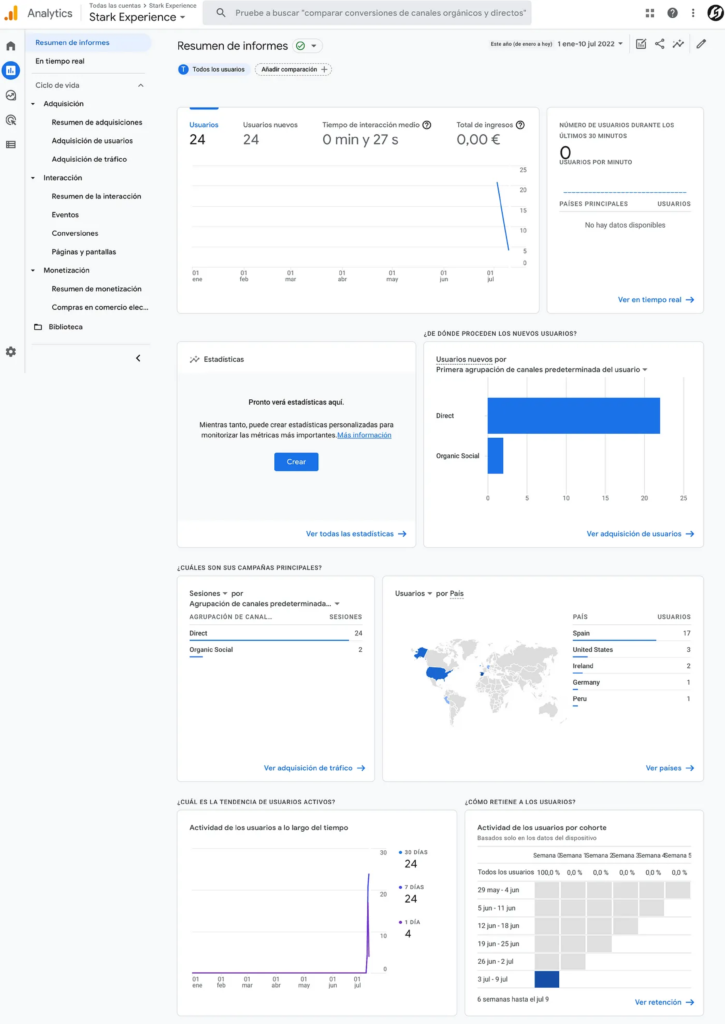
From Google Analytics, we were able to analyze the following metrics among many others.
Conclusions and future prospects
I received positive feedback on my product. While there is a significant risk due to its futuristic design—both in terms of affordability and appealing to an audience less familiar with this technology—I noticed that it sparked curiosity among potential users. For future possibilities, I considered:
Creating social media profiles on Facebook, Instagram, and Twitter to reach a wider audience.
Collaborating with companies for various activities, such as gardening videos sponsored by Fronda or meditation videos sponsored by Headspace.
Partnering with individuals who promote the slow living philosophy.
Developing Stark merchandise, including t-shirts, caps, and other products to enhance brand visibility.
Releasing detailed reports on collected metrics, as initial data was limited.
Implementing A/B testing and other strategies to attract and engage customers.
In conclusion, Stark Experience is the product intended for users who want to achieve a slow living lifestyle, live in the present, be.